Hiatal & Paraesophageal Hernia Repair and Anti-Reflux Surgery
Dr. Matthew Tufts, MD, FACS, is a minimally invasive and endoscopic general surgeon who completed fellowship training in foregut surgery, the surgery of the esophagus and stomach. He repairs hiatal and paraesophageal hernias and performs anti-reflux surgery for patients from Port Charlotte, Punta Gorda, North Port, Cape Coral and North Fort Myers. This guide covers both, because they are so often done together.
← Reflux & hiatal hernia overview
What is a hiatal hernia?
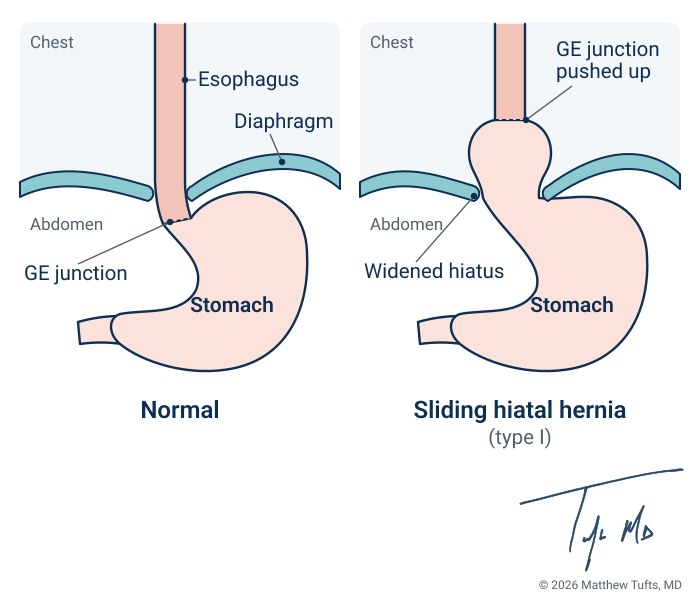
The hiatus is the opening in your diaphragm (the breathing muscle between your chest and belly) where the esophagus passes through to reach the stomach. In a hiatal hernia, part of the stomach slides up through this opening into the chest.
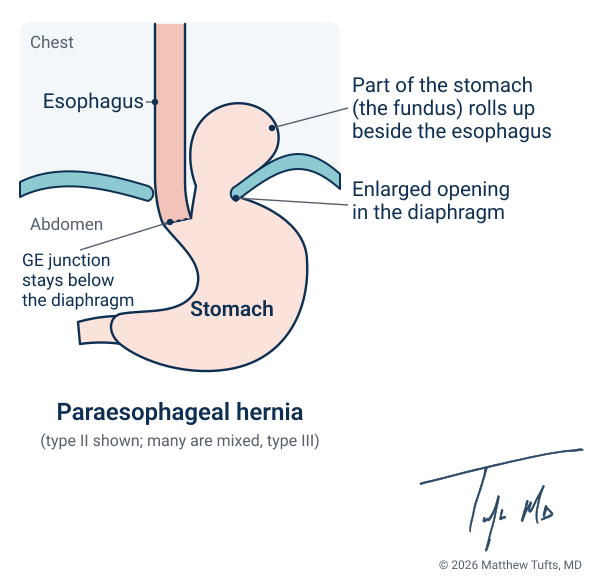
A paraesophageal hernia is a type of hiatal hernia in which part of the stomach, and sometimes other organs, pushes up alongside the esophagus. These tend to be larger and are more likely to cause symptoms such as pressure, trouble swallowing or vomiting.
What is GERD, and how is it related?
Gastroesophageal reflux disease (GERD) is when stomach acid and contents flow back into the esophagus often enough to cause heartburn, regurgitation, a sour taste, cough, hoarseness or irritation of the esophagus. A hiatal hernia can weaken the natural valve at the bottom of the esophagus, so many people with a hiatal hernia also have reflux.
Who may need surgery?
Many people with reflux or a small hiatal hernia do well with lifestyle changes and medicine and never need an operation. Surgery may be considered if you:
- Have a paraesophageal or large hiatal hernia causing chest or upper-belly pressure, feeling full quickly, trouble swallowing, vomiting or anemia
- Have reflux that continues despite medicine, or regurgitation that medicine does not control
- Would prefer not to take reflux medicine long term, or have side effects from it
- Have reflux-related damage to the esophagus, such as inflammation or narrowing
- Have a hernia that has come back after an earlier repair
Weight, BMI and your results
Body weight is one of the most important factors in how well hiatal hernia surgery works. Doctors often describe weight using body mass index (BMI), a measure based on height and weight. Extra weight adds pressure inside the abdomen, and that pressure pushes on the repair in the diaphragm.
Research shows that the chance of a hiatal hernia coming back (recurrence) is very high when BMI is over 35. For that reason, Dr. Tufts may recommend losing some weight before surgery. This is not a judgment. It is a way to give your repair the best chance of lasting and to lower the risks of surgery.
If weight loss is recommended, we will talk with you about options and make a plan that fits you. If your hernia is causing serious problems, Dr. Tufts will weigh the timing of surgery with you.
Testing before surgery
Before recommending surgery, Dr. Tufts makes sure reflux is truly the cause of your symptoms and maps out your anatomy. Testing may include:
- Upper endoscopy (EGD) to look at the esophagus and stomach, sometimes with MiVu™ mucosal integrity testing to help evaluate reflux
- Esophageal manometry to measure how well the esophagus muscles squeeze
- A barium swallow X-ray or CT scan to show the size and position of the hernia
- Acid (pH) monitoring in some patients
If your EGD shows Barrett’s esophagus, surveillance endoscopy is part of your long-term care, and TissueCypher® testing may be recommended.
How the operation is done
These operations are usually performed with minimally invasive surgery through several small incisions in the upper abdomen, using either laparoscopic instruments or the Da Vinci robotic system. With the Da Vinci system, Dr. Tufts sits at a console in the operating room and controls every movement of the instruments. Recurrent paraesophageal hernias are primarily repaired robotically. You are fully asleep under general anesthesia.
The repair generally has three parts:
- Reduce the hernia: the stomach is gently brought back down into the abdomen and the hernia sac is removed.
- Close the hiatus: the opening in the diaphragm is tightened with stitches. In some cases it is reinforced, and Dr. Tufts will explain whether that is likely for you.
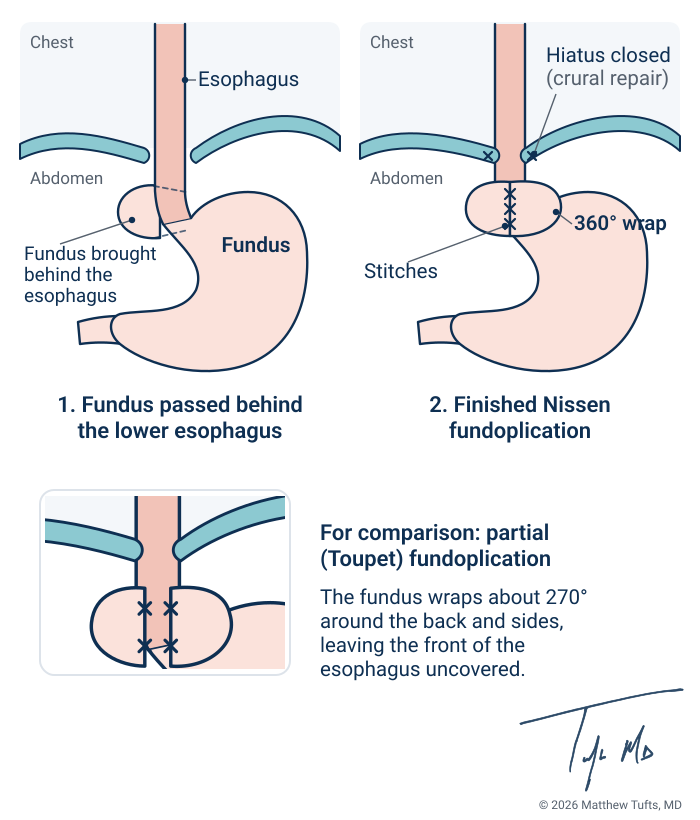
- Rebuild the valve (fundoplication): the upper part of the stomach is wrapped around the lower esophagus to create a stronger barrier against reflux.
Nissen or partial fundoplication?
A Nissen fundoplication is a full, 360-degree wrap. A partial fundoplication (such as a Toupet or Dor) wraps part of the way around. Both are established operations. Which one fits you depends on your symptoms, your test results, especially how well your esophagus squeezes, and your goals. Dr. Tufts will recommend the type of wrap he thinks fits you best and explain why.
Potential benefits
- Relief of pressure, fullness, swallowing trouble or vomiting caused by a large hernia
- Better control of heartburn and regurgitation for many patients
- For many people, the chance to reduce or stop daily reflux medicine (results vary, and some people still need medicine)
- Small incisions, which usually mean less pain and a quicker return to activity than open surgery
Possible risks
All surgery carries some risk. Dr. Tufts will go over the risks that apply to you. General risks include:
- Bleeding, infection, and risks from anesthesia
- Injury to nearby structures, such as the esophagus, stomach, spleen or lungs, which is uncommon
- Blood clots in the legs or lungs
- Rarely, the need to change to an open operation for safety
Three effects are specific to this operation, and it helps to know about them ahead of time:
- Dysphagia (trouble swallowing): food may feel like it sticks or goes down slowly at first. This is usually temporary and improves as swelling settles over the first weeks, which is why you start with liquids and soft foods. Occasionally a gentle stretch of the esophagus (dilation) is needed.
- Gas-bloat syndrome: after a fundoplication, some people find it harder to burp or vomit, so swallowed air can build up and cause bloating, fullness or extra gas. Eating slowly, avoiding carbonated drinks and not using straws can help, and it often improves with time.
- Recurrence: the hernia or reflux can come back over time and may need further treatment. Recurrence after hiatal hernia surgery can be higher than after other types of surgery; in some studies it has been as high as 15 to 18 percent. In Dr. Tufts’s practice, recurrence has been much less common than these published figures. Weight plays a large role: recurrence is much more likely when BMI is over 35 (see Weight, BMI and your results).
Preparing for surgery
- If weight loss was recommended before surgery, follow the plan you and Dr. Tufts agreed on
- Finish any testing Dr. Tufts orders, along with pre-surgery blood work and clearance from your other doctors if needed
- Review all medicines with our office, especially blood thinners, diabetes medicines and weight-loss injections, which may need to be paused
- If you smoke, stopping before surgery helps healing
- Follow the fasting instructions you are given, and arrange for an adult to drive you home
Recovery and what to expect
Many patients stay in the hospital overnight; some go home the same day and some need a little longer. You will be up and walking soon after surgery, which helps prevent blood clots and speeds recovery.
- Diet: you will start with liquids and move to soft foods over the first few weeks while the area heals. Small meals, eaten slowly and chewed well, work best. You will get written diet instructions.
- Activity: walking is encouraged right away. Avoid heavy lifting and straining for the period Dr. Tufts recommends.
- Work and driving: many people return to desk work within a couple of weeks. Do not drive while taking narcotic pain medicine.
- Follow-up: you will see Dr. Tufts in the office to check your healing, diet and symptoms.
Call the office for fever, increasing pain, redness or drainage at an incision, or trouble keeping liquids down. Call 911 for chest pain, trouble breathing, or vomiting blood.
Where surgery is performed
Dr. Tufts operates at AdventHealth Port Charlotte and Murdock Surgery Center. Consultations and follow-up visits are at the Charlotte Harbor Surgical office in Port Charlotte.
Schedule a consultation
To find out whether this surgery is right for you, call (941) 391-5102 to schedule a visit with Dr. Tufts at Charlotte Harbor Surgical, 4245 Kings Hwy, Unit A, Port Charlotte, FL 33980. We see patients from Port Charlotte, Punta Gorda, North Port, Cape Coral and North Fort Myers and across Southwest Florida.
We care for patients from Port Charlotte, Punta Gorda, North Port, North Fort Myers, Cape Coral, Englewood and across Charlotte County and Southwest Florida.
Frequently asked questions
Can a hiatal hernia be fixed without surgery?
Medicine and lifestyle changes can control reflux symptoms, but they do not close the opening in the diaphragm. Only surgery repairs the hernia itself. Many small hernias never need repair.
Does my weight affect hiatal hernia surgery?
Yes. Weight is one of the biggest factors in how well a hiatal hernia repair holds up. Research shows the chance of the hernia coming back is very high when BMI is over 35, so Dr. Tufts may recommend losing weight before surgery to improve your results and lower your risk. If so, we will discuss options and make a plan together.
Is a paraesophageal hernia dangerous?
Many cause bothersome symptoms rather than emergencies, but the stomach can occasionally twist or become trapped. That is why paraesophageal hernias are usually evaluated by a surgeon. Severe chest or upper-belly pain, being unable to swallow or keep anything down, or vomiting blood needs emergency care.
What is the difference between a Nissen and a partial fundoplication?
A Nissen is a full 360-degree wrap of the stomach around the lower esophagus. A partial fundoplication wraps only part of the way around. Dr. Tufts chooses based on your symptoms and how well your esophagus squeezes on manometry.
Will I be able to stop my reflux medicine?
Many patients are able to reduce or stop reflux medicine after anti-reflux surgery, but results vary and some people still need medicine. No operation can guarantee a result. Dr. Tufts will tell you what is realistic for you.
Will I be able to burp or vomit after surgery?
Some people find burping or vomiting harder after a fundoplication, especially early on. When swallowed air builds up and causes bloating, fullness or extra gas, this is called gas-bloat syndrome. It often improves with time, and eating slowly and avoiding carbonated drinks can help. It is one of the things Dr. Tufts considers when choosing the type of wrap.
Will I have trouble swallowing after surgery?
Some trouble swallowing (dysphagia) is common at first while swelling settles. It is usually temporary, which is why you start with liquids and soft foods. Occasionally a gentle stretch of the esophagus (dilation) is needed.
Can a hiatal hernia come back after surgery?
Yes. Recurrence after hiatal hernia surgery can be higher than after other types of surgery; in some studies it has been as high as 15 to 18 percent. In Dr. Tufts’s practice, recurrence has been much less common than these published figures. Keeping a healthy weight matters, because recurrence is much more likely when BMI is over 35.
Is the surgery done robotically?
It is done with minimally invasive surgery, either laparoscopically or with the Da Vinci robotic system. Recurrent paraesophageal hernias are primarily repaired robotically. Dr. Tufts will recommend the approach that fits you best.
How long will I be on a special diet?
Usually for a few weeks. You will progress from liquids to soft foods to a regular diet as swallowing feels normal, following the written instructions you receive.
Do you see patients from outside Port Charlotte?
Yes. Patients come to our Port Charlotte office from Punta Gorda, North Port, Cape Coral, North Fort Myers, Englewood and across Southwest Florida.
This page is general information, not medical advice. Every patient is different. Dr. Tufts will review your history, exam and test results with you and explain the options, benefits and risks that apply to you.
Schedule a consultation with Dr. Tufts
Call Charlotte Harbor Surgical in Port Charlotte. Mon–Thu 7:30 am–4:00 pm, Fri 7:30 am–12:00 noon.